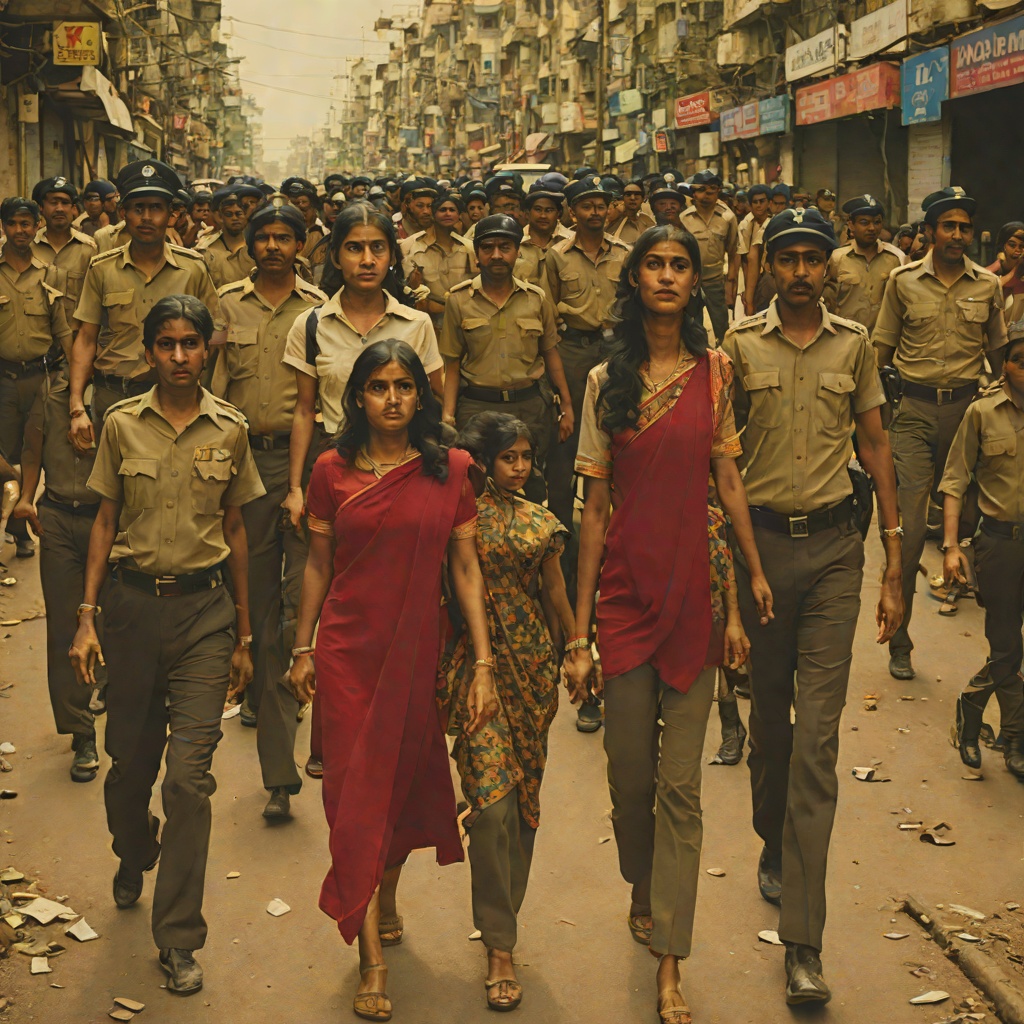
Sujata Nikhalje's MCOCA arrest
Mafia Queens of MumbaiSujata Nikhalje, alias Nani, holds the singular distinction of being the only 'don wife' to have been slapped with charges under the Maharashtra Control of Organised Crime Act (MCOCA) for using a business enterprise to legitimise her husband's criminal activities. As the wife of self-proclaimed patriotic don Rajendra Sadashiv Nikhalje, better known as Chhota Rajan, Sujata transformed the obscure lower-middle-class residential locality of Tilak Nagar in suburban Mumbai into a target for upmarket real estate development. Her arrest on 14 December 2005, along with three accomplices, on charges of aiding and abetting the activities of an organised crime syndicate run by Chhota Rajan, represented a landmark moment in the Indian legal system's attempts to dismantle the financial infrastructure of the Mumbai underworld.
Background and Rise of the Corporate Don Wife
A decade before her arrest, Tilak Nagar was an unremarkable locality dotted with decrepit government quarters, a 'township colony' comprising wide open spaces and old buildings. One woman with ambitious designs wanted to change the whole topography of this area and transform it into upmarket real estate for the crème de la crème of the city. Early in the year 2000, Sujata started a construction company with the ill-gotten money of her fugitive husband, despite having no knowledge of the industry. Surprisingly, her company soon began leading the race in remodelling Tilak Nagar into an upmarket suburban destination in Mumbai.
In the late '90s, real estate and rental prices were soaring across Mumbai and builders were looking for better prospects beyond the city. Tilak Nagar was an attractive destination for redevelopment, and builders had already started taking an interest in the area, redeveloping old buildings. More often than not, Sujata's intervention was required. With her reputation as 'Nani' and wife of a gangster, Sujata often managed to arm-twist several people into selling their homes for good prices. Realising the money-spinning options in the construction business, Sujata began her own construction company, Khushi Developers Private Ltd, named after her youngest daughter. Before she went into business, she employed a powerful team of chartered accountants to handle the finances of the company. With their help, she prepared a strategy to slowly transform Tilak Nagar into a plush suburban locality, pulling down old buildings and replacing them with sprawling malls, high-rises and office complexes. Sujata turned into a corporate don wife, meeting builders through the day and signing deals worth crores of rupees.
The Mechanics of the Criminal Enterprise
According to the police, because of her lack of knowledge in business and finances, Sujata initially worked with a group of consultants to get a clearer picture of her husband's financial stocks and to seek advice on how her husband's businesses could be legitimised. Her advisors zeroed in on Bollywood and the real estate industry, as they were businesses where black money could be invested. However, Sujata's brother-in-law, Deepak Nikhalje, had recently been hit by allegations of using his brother's money to fund a film. In 1999, he had produced the Hindi film Vaastav, starring actor Sanjay Dutt. When Vaastav became a hit, the media raised a hue and cry as they thought that Deepak was a front for his gangster brother. Deepak had a hard time proving that it was his own money and not his brother's that had funded the film. This storm deterred Sujata from investing in films because, if the brother could be accused of being a front, then the wife would be a surefire target of such allegations. So Sujata went for the other option—real estate.
Throughout her business dealings, Sujata kept Rajan informed of her meetings via telephone calls. Following the advice of her husband, she also involved his men to ensure she had her way. Often, Rajan's goons would terrorise builders through extortion and land-grabbing. Due to the fear psychosis generated among the builders and the common masses by Rajan's gang, Sujata managed to run her business smoothly. This honeymoon period, however, didn't last long. The police, who had been tapping Sujata's phone lines, learned that, while speaking to Rajan, her conversations would often drift into the acquisition of land and deals. Sensing that something was up, the police decided to close in on her. At the same time, one of the builders from a society in Chembur who had been threatened by Rajan's gang in a building contract deal, filed a complaint with the police. This witness provided the police with the much-needed impetus for their case.
The Arrest and the Legal Battle
Following the complaint and police inquiries, Sujata and three other accomplices, i.e., Suresh Shyamrao Shinde alias Don, Harvinder Singh Bedi alias Kukku Daruwala and Rakesh Surver, were arrested under the MCOCA on 14 December 2005. Though Sujata was remanded to police custody till 27 December 2005, the police initially found it very difficult to make any headway in the case. Allegedly, by this time Sujata had become so hardened and obstinate, that she refused to drink water or eat anything during the first sixteen days of custody.
Police investigations showed that Sujata maintained thirty-seven accounts in various banks, including Standard Chartered, State Bank of India, Sangli Bank, Canara Bank and the Union Bank of India. These bank accounts were in the names of her three daughters. The police suspected that the money in these accounts came from extortion payments from India and abroad but were passed off as goodwill donations in the name of the three daughters. Foreign exchange worth Rs 13 lakh had also come into these accounts from countries like Singapore and Abu Dhabi. Sujata maintained that these were voluntary contributions made by businessmen and well-wishers, a claim that the police was not willing to accept. Following this, all her accounts were frozen.
For the police, the manner in which the money had been safely stacked in banks across the country pointed towards external help. Further investigations revealed the involvement of a prominent chartered accountant, identified as Bharat Dhudani who allegedly handled the financial transactions of the real estate projects of Khushi Developers. The police alleged that Sujata had given Rs 2 crore (obtained from Rajan) to Dhudani, who gave it to eight firms to buy shares in her company. The police traced most of Sujata's accounts through documents, which included fourteen files found at Dhudani's Bandra office.
Aftermath and Significance
At one stage, the police realised that the whole case was getting very complicated. Hence, the police sought the help of the Directorate of Revenue Intelligence, Mumbai police's Crime Branch, Enforcement Directorate and the Income Tax department of India to help them put the pieces together. With their help, the police managed to get enough evidence to incriminate her and Sujata was charge-sheeted under the MCOCA in 2006. After spending two years in jail, Sujata was finally released on a bail bond of Rs 1 lakh on 12 September 2007, as the police failed to prove the charges against her. Since then, the police has been working towards presenting a watertight case against her; she, on her part, has roped in a battery of professional lawyers to defend her.
In 2008, Sujata requested permission from the court to travel to Hong Kong and Singapore to help get her daughter Anita admitted to a foreign university, and also to defreeze her bank account to fund her daughter's education. Both her demands were opposed by the Enforcement Directorate as they saw it as an attempt by her to flee the country and stay with Rajan. The ED stated that the investigation against Sujata under the Money Laundering Act was in its final stage, hence her application was rejected. For now Sujata is lying low in order to avoid any further confrontation with the law. However, she continues to enjoy the privilege of being Tilak Nagar's Nani. And as long as she can do so, neither she nor her husband has much to worry about. Her case stands as a testament to the book's central argument that these women were not blank slates written upon by dangerous male mafia members, but active agents who pushed the boundaries of dominant moral codes, using crime not only as a way of transcending their poverty and limitations but also as a life-saving concept.